
Weeks 1–2
Pain
Calm the pain, protect the repair.
Hands-on techniques and gentle guided movement calm post-surgical pain and swelling, working within your surgeon’s protocol from your very first home visit.
What We Treat
The stiffness when you stand up from the couch. The twinge that decides whether today’s a good day. It’s fixable, and it starts with a cause-first evaluation, not a guess.
Sound Familiar?
Two or more? Keep reading.
Why It Happens
A slow or stalled recovery doesn’t happen for no reason. And it’s almost never just one thing. It’s usually some mix of four culprits: muscle that quietly weakened in the weeks before surgery, while you waited on a date and moved less than you should have. Scar tissue that forms around the repair and limits motion if nobody addresses it early. Guarding, the natural instinct to protect the area, that turns into stiffness the longer it lingers. And a home exercise sheet followed alone, with no one checking your form or dosage as you improve.
None of that shows up on the surgery report. It takes a real, cause-first evaluation in your home to sort out what’s actually slowing your recovery down. That’s why a photocopied exercise sheet so often falls short: it treats the timeline, not the person doing the work. Get the mechanics right, before and after surgery, and the recovery gets obvious.
The Honest Truth
Nobody regrets starting too early. Every week, someone tells us they regret waiting.
How We Fix It
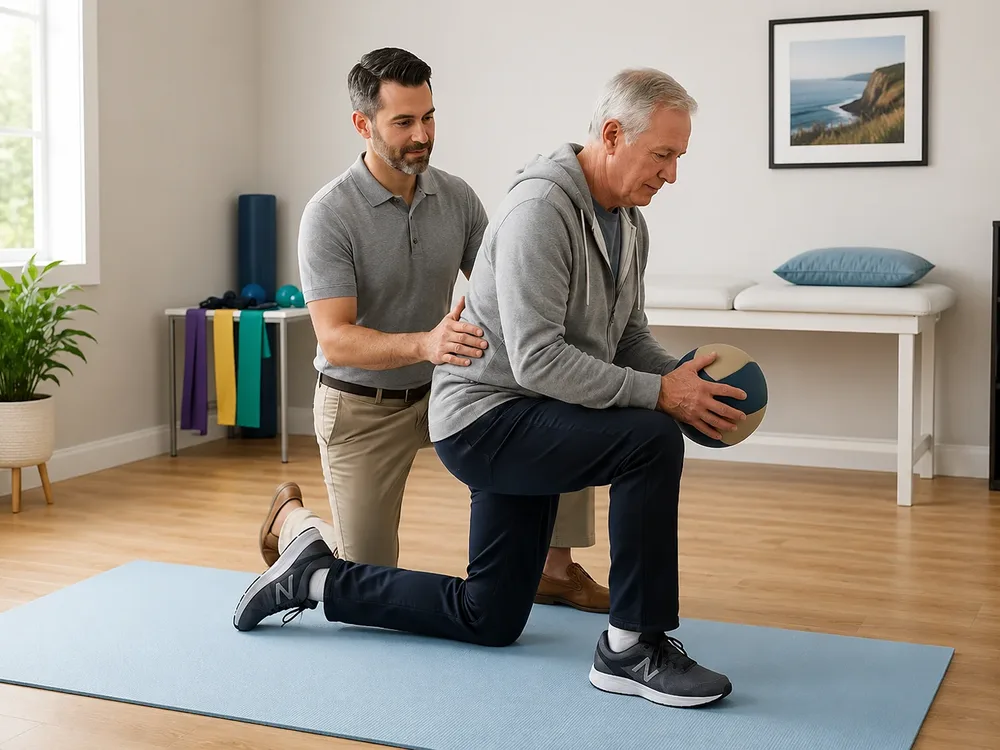
Prehab gets your body ready before surgery. Then every plan has an endpoint: here’s what the four phases look like on the way back.
Weeks 1–2
Pain
Hands-on techniques and gentle guided movement calm post-surgical pain and swelling, working within your surgeon’s protocol from your very first home visit.
Weeks 2–6
Prime
Targeted mobility work breaks up early scar tissue and restores range of motion in the joint, without pushing past what your surgery allows.
Weeks 6–10
Perform
Progressive strengthening rebuilds the muscle that faded before surgery and the stability you’ll need for the activities you’re working back toward.
Weeks 10+
Prevent
Real-world movement gets tested under load before you’re cleared to go all-in: that’s the endpoint, not just another visit.
I’d already had some physical therapy after my reverse total shoulder replacement, but I still needed more hands-on support than I was getting. Once we started working together, my range of motion took off, and by the end I had the tools and the confidence to keep going completely on my own.
Shared by Rhonda M. · Reverse shoulder replacement
At first: still using a walker just to get to the bathroom
By the end: back to walking the beach every morning
Questions, Answered
As soon as you have a surgery date, ideally two to six weeks out, though earlier is fine too. That window gives us time to build strength and range of motion in the area, which tends to make the recovery afterward easier and faster. Even a short prehab window helps. We’ll build a plan around whatever time you have left before your surgery date.
No, and it’s not meant to. Your surgeon’s protocol always comes first, we build every visit around it, not instead of it. What you get on top of that sheet is a licensed physical therapist in your home, one-on-one, every visit, making sure you’re doing each exercise correctly and progressing it at the right pace instead of guessing on your own.
Most plans move through all four phases, Pain, Prime, Perform, and Prevent, over 8–12 weeks, depending on the surgery and where you start. Every visit is one-on-one with a licensed physical therapist in your home. We’re a cash-based practice, so pricing is straightforward and you’ll know the cost up front, and here in South Carolina you don’t need a referral to start.
Book Your Visit
Request a time and a real person calls you back, usually within two business hours. No phone tree. No ‘someone will reach out.’ Just a plan.
4.9 · 50 Google reviews
Typical response: under 2 business hours
Step 1 of 5
That’s the hard part done. We’ll call during business hours to lock in your time. Most people are on the schedule same week.
Visit Us