
Weeks 1–2
Pain
Calm the pain down.
Hands-on techniques calm joint irritation and swelling early, taking the edge off starting your very first visit.
What We Treat
The stiffness when you stand up from the couch. The twinge that decides whether today’s a good day. It’s fixable, and it starts with a cause-first evaluation, not a guess.
Sound Familiar?
Two or more? Keep reading.
Why It Happens
Your hip or knee doesn’t hurt for no reason, and it’s rarely just wear and tear. It’s usually some mix of three culprits: joint imbalances, where weak or tight muscles pull the hip or knee out of its natural alignment. Repetitive stress from walking, running, golf, or one too many flights of stairs. And, for some, real arthritis or cartilage loss that’s changed how the joint moves and loads.
None of that sorts itself out on a quick glance. It takes a real, cause-first evaluation to figure out which one is actually driving your pain, and how much each one is contributing. That’s why generic exercises, or simply resting the joint, so often fall short: they treat the symptom, not the source. Find the real cause, and the fix gets obvious.
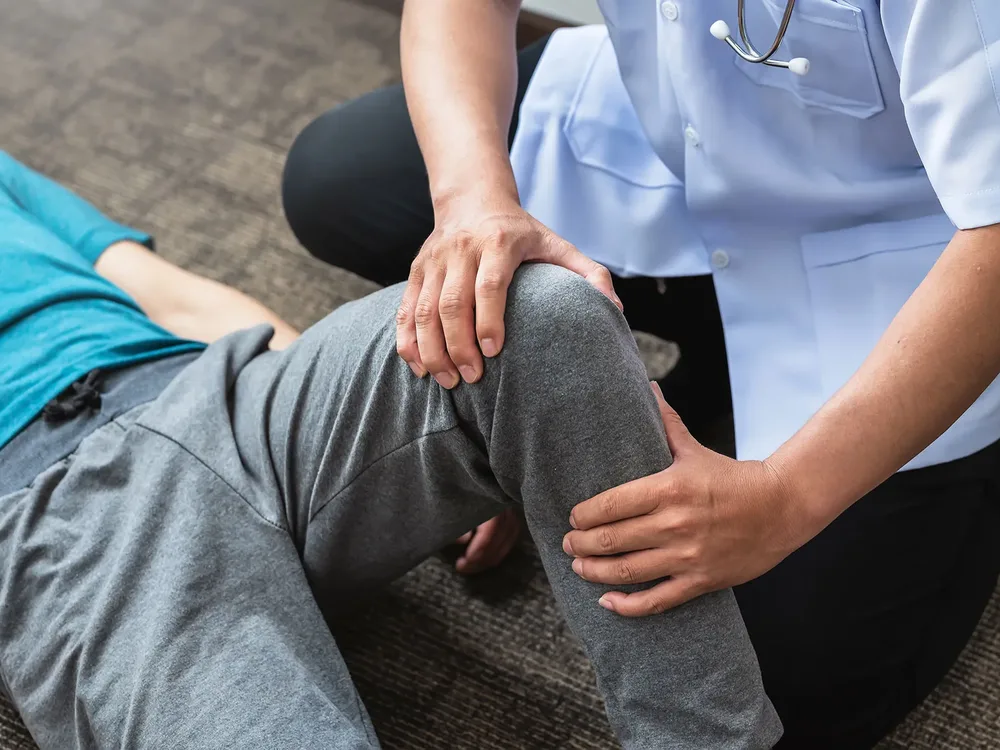
The Honest Truth
Nobody regrets starting too early. Every week, someone tells us they wish they hadn’t waited.
How We Fix It
Every plan has an endpoint. Here’s what the four phases look like for a hip or knee.
Weeks 1–2
Pain
Hands-on techniques calm joint irritation and swelling early, taking the edge off starting your very first visit.
Weeks 2–6
Prime
Targeted mobility work restores motion in the joint and starts correcting the muscle imbalances that have been pulling on it.
Weeks 6–10
Perform
Progressive strengthening of the hip and knee stabilizers builds the real load tolerance the joint was missing in the first place.
Weeks 10+
Prevent
Walking, stairs, golf, or sport-specific mechanics get tested under real load before you’re cleared to go all-in: that’s the endpoint, not just another visit.
I came in convinced I needed a new hip. At 60 years old, six weeks out from a national powerlifting meet, that was not the news I wanted. With Jodi’s guidance, I not only competed, I set records.
Shared by Marion M. · Hip pain
Before: Tamra’s husband couldn’t make it through a shift without his knee giving out
After: in-home knee exercises and taping had him back on track
Questions, Answered
Usually not, and it’s rarely the first step. Arthritis on an X-ray doesn’t always explain how much pain you’re in, plenty of people with real changes on imaging have very little pain, and plenty of people with almost none feel plenty of pain. You also don’t need a physician referral to get started here in South Carolina. We begin with a hands-on, cause-first evaluation of your hip or knee to find what’s actually driving your symptoms, and go from there.
Yes, in most cases movement helps more than rest does. Hurt doesn’t always mean harm, total rest tends to make a hip or knee stiffer and weaker, which sets up the next flare-up. The key is dosing the right movement for your specific joint, which is exactly what a licensed physical therapist sorts out in your evaluation, then progresses safely as you improve.
Most patients feel meaningful change within 4–6 visits. A full plan for hip and knee pain runs through all four phases, Pain, Prime, Perform, and Prevent, typically over 8–10 weeks, depending on how long you’ve been dealing with it and what’s driving it. Either way, you get a plan with an endpoint: you’ll always know which phase you’re in and what’s left, not an open-ended string of appointments.
Book Your Visit
Request a time and a real person calls you back, usually within two business hours. No phone tree. No ‘someone will reach out.’ Just a plan.
4.9 · 50 Google reviews
Typical response: under 2 business hours
Step 1 of 5
That’s the hard part done. We’ll call during business hours to lock in your time. Most people are on the schedule same week.
Visit Us