
Weeks 1–2
Pain
Calm the pain down.
Hands-on techniques, including dry needling, calm the irritated fascia and tight calf, taking the edge off that first-step pain starting your very first visit.
What We Treat
The stiffness when you stand up from the couch. The twinge that decides whether today’s a good day. It’s fixable, and it starts with a cause-first evaluation, not a guess.
Sound Familiar?
Two or more? Keep reading.
Why It Happens
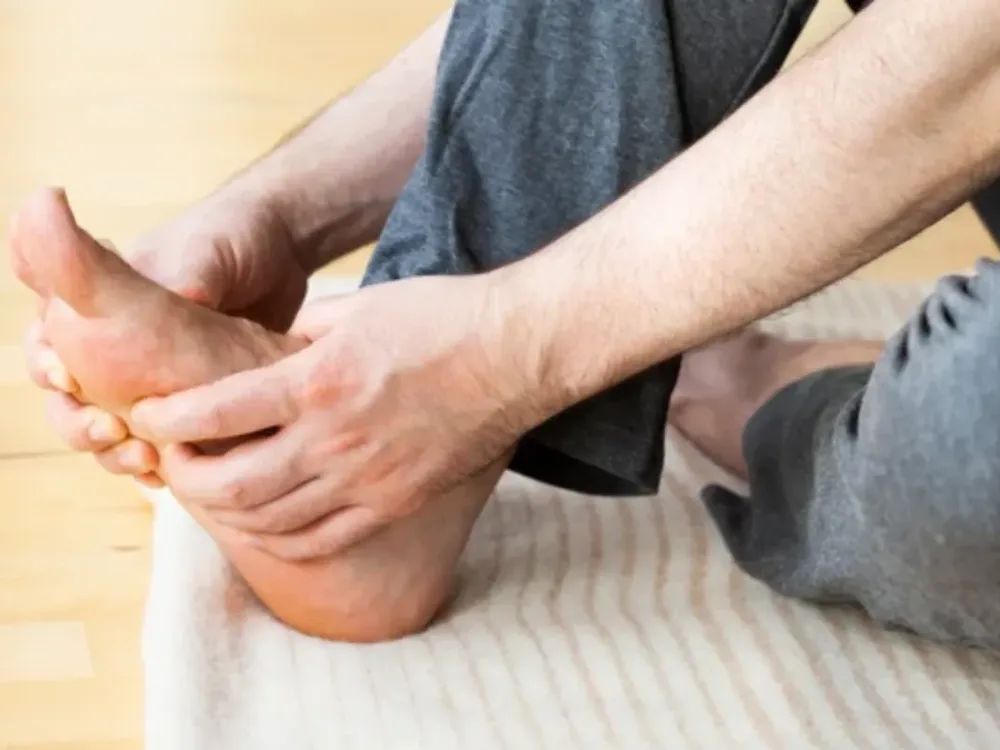
Your heel doesn’t hurt for no reason. And it’s almost never just about the bottom of your foot. It’s usually some mix of a few culprits: a plantar fascia that’s overloaded and inflamed right where it meets your heel bone. Calves and ankles that have gotten so tight they can’t absorb shock the way they should. Long hours on your feet, standing on hard floors, a sudden jump in mileage, or shoes that quit doing their job. And a walking pattern that keeps reloading the same strained tissue before it ever gets a chance to heal.
None of that shows up from a quick look at your foot. It takes a real, cause-first evaluation, right there in your home, to sort out which one is actually driving your pain. That’s why rest, a new insole, or a generic stretching sheet so often falls short: they treat the symptom, not the source. Find the real cause, and the fix gets obvious.
The Honest Truth
Nobody regrets starting too early. Every week, someone tells us they regret waiting.
How We Fix It
Every plan has an endpoint. Here’s what the four phases look like for plantar fasciitis.
Weeks 1–2
Pain
Hands-on techniques, including dry needling, calm the irritated fascia and tight calf, taking the edge off that first-step pain starting your very first visit.
Weeks 2–6
Prime
Targeted mobility work loosens up the calf and ankle that have been quietly overloading your fascia.
Weeks 6–10
Perform
Progressive foot and calf strengthening builds the endurance to be on your feet all day without paying for it later.
Weeks 10+
Prevent
Walking, standing all day, even a full round of golf get tested under real load before you’re cleared to go all-in: that’s the endpoint, not just another appointment.
My plantar fasciitis had my pain at a 10, I couldn’t put weight on my heel without wincing. After four dry needling sessions on my foot and calf, I’m down to about a 3. Jodi sends me exercises every day and actually checks in to see how I’m doing.
Shared by Mary Lacy W. · Plantar fasciitis
At first: gritting her teeth just to get to the coffee pot
By the end: walking the beach every morning, pain-free
Questions, Answered
Usually not. Plantar fasciitis is diagnosed through a hands-on evaluation of your foot, ankle, and calf, not a picture. X-rays are typically only needed to rule out something rare, like a stress fracture or a heel spur causing symptoms on its own. We start with a cause-first evaluation to find exactly what’s driving your heel pain, and if imaging ever becomes genuinely necessary, we’ll point you in the right direction. You don’t have to wait on a scan to start feeling better.
No. South Carolina allows direct access to physical therapy, so you don’t need a referral to get started. That means we can begin your cause-first evaluation as soon as you’re ready, right in your own home, without waiting on a doctor’s note. If your situation calls for anything outside our scope, your physical therapist will let you know and help point you in the right direction.
Most people feel meaningful relief within just a few visits: plantar fasciitis often responds quickly to hands-on work like dry needling paired with the right exercises. A full plan runs through all four phases, Pain, Prime, Perform, and Prevent, typically over 6–8 weeks, depending on how long you’ve been dealing with it. Either way, you get a plan with an endpoint: you’ll always know which phase you’re in and what’s left, not an open-ended string of appointments.
Book Your Visit
Request a time and a real person calls you back, usually within two business hours. No phone tree. No ‘someone will reach out.’ Just a plan.
4.9 · 50 Google reviews
Typical response: under 2 business hours
Step 1 of 5
That’s the hard part done. We’ll call during business hours to lock in your time. Most people are on the schedule same week.
Visit Us